
minor Arcana · swords · 6
Six of Swords
What Six of Swords Is Telling You
“Calmer waters lie ahead.”
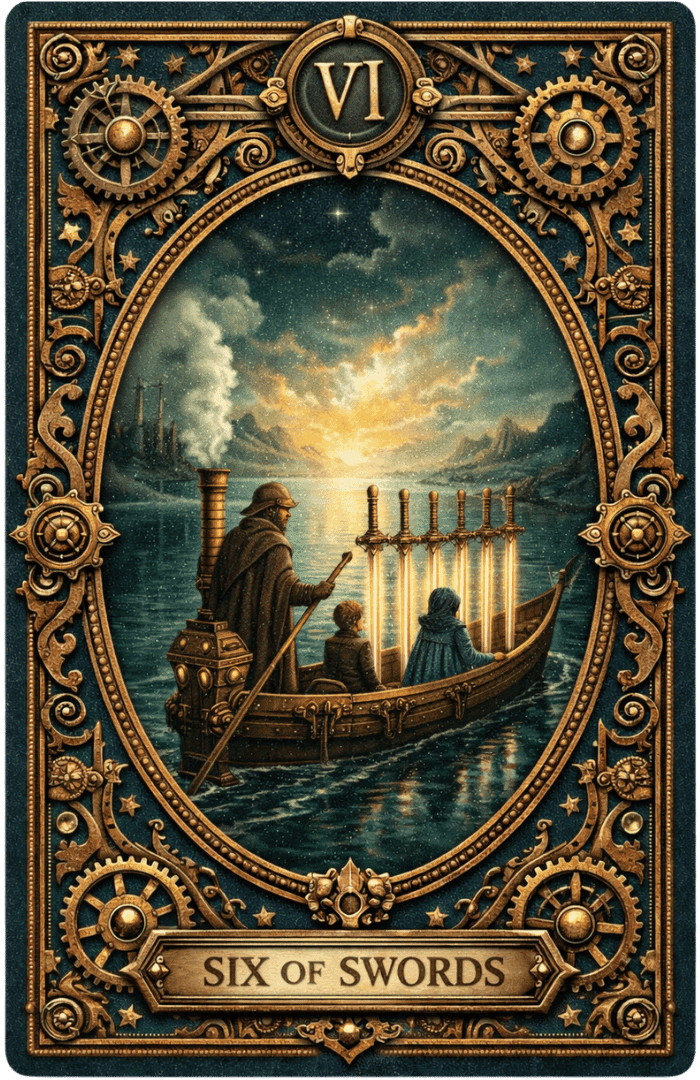
When Six of Swords appears in your reading, it is an invitation to explore transition and moving on. A ferryman poles a boat carrying a woman and child across still water, six swords standing upright in the bow — a passage from strife toward peace.
Upright vs Reversed
Upright
Calmer waters lie ahead. The Six of Swords marks a transition away from turbulence — a journey toward peace. You are leaving difficulty behind and moving, slowly but steadily, toward a more settled shore.
Reversed
Resistance to moving on, or turbulence in the transition. The journey forward is being blocked by the pull of the past.
Six of Swords in Your Reading
Love & Relationships
In matters of love & relationships, Six of Swords brings the energy of transition and moving on. Through the lens of love & relationships, calmer waters lie ahead.
Career & Finance
In matters of career & finance, Six of Swords brings the energy of transition and moving on. Through the lens of career & finance, calmer waters lie ahead.
Health & Wellbeing
In matters of health & wellbeing, Six of Swords brings the energy of transition and moving on. Through the lens of health & wellbeing, calmer waters lie ahead.
Six of Swords — Yes or No?
Yes or No Reading
It Depends
This card is nuanced and context-driven. The answer depends heavily on the surrounding cards and the specifics of your question.
Card Combinations
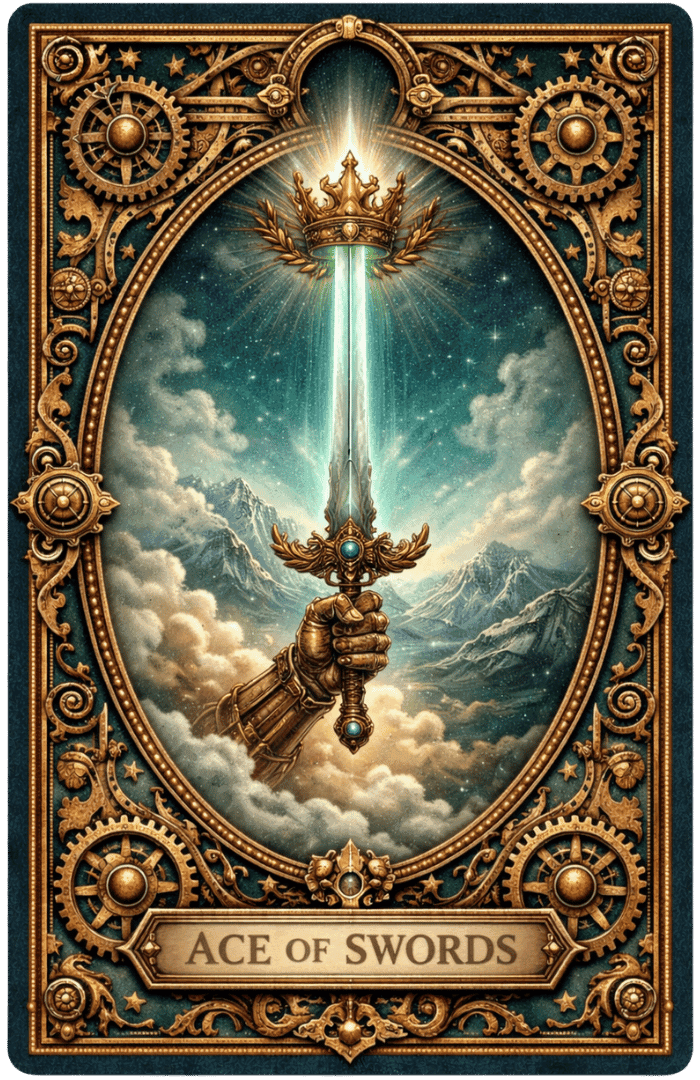
Six of Swords + Ace of Swords
Together, these cards speak to transition meeting clarity — a powerful combination for career & finance.
Read about Ace of Swords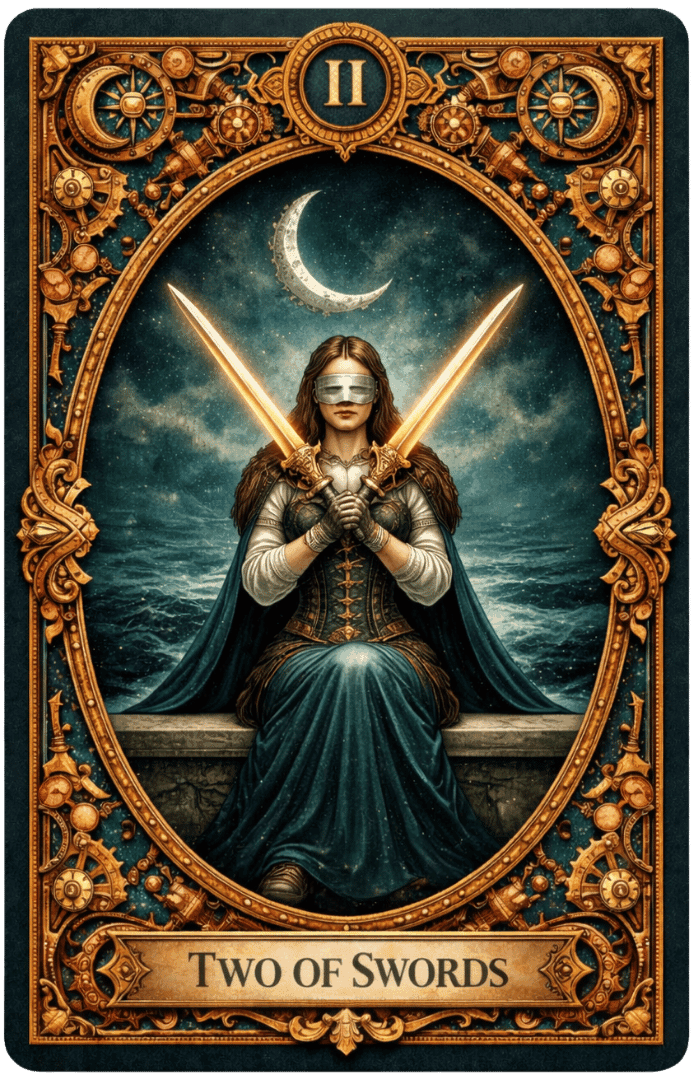
Six of Swords + Two of Swords
Together, these cards speak to transition meeting indecision — a powerful combination for love & relationships.
Read about Two of Swords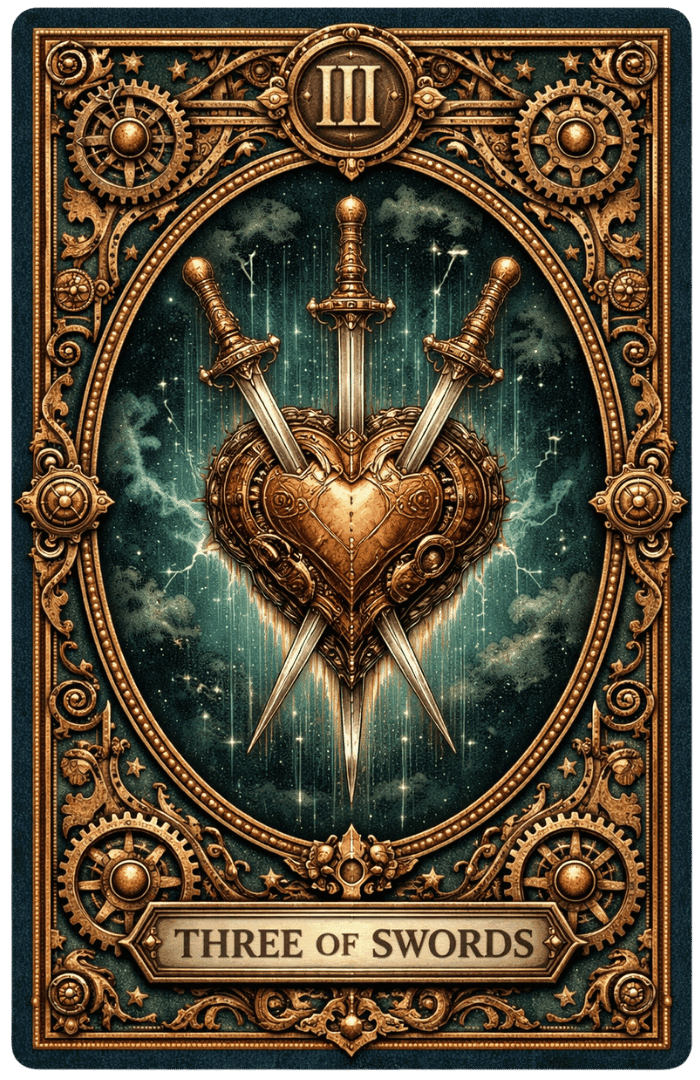
Six of Swords + Three of Swords
Together, these cards speak to transition meeting heartbreak — a powerful combination for love & relationships.
Read about Three of SwordsZodiac & Element Connection
Six of Swords resonates with Fire signs — Aries, Leo, Sagittarius. Its themes of transition and moving on align with their passionate drive and transformative action.
Journaling Prompt
Reflect on Six of Swords
What role does transition play in your life right now? How might Six of Swords's message about moving on guide your next step?
Affirmation
“I move with grace toward calmer waters, releasing what troubled me behind.”
See Six of Swords in today's reading
Drawn today? Check the daily card for context.
Related Cards
Six of Swords — FAQ
What does Six of Swords mean in tarot?
Calmer waters lie ahead. The Six of Swords marks a transition away from turbulence — a journey toward peace. You are leaving difficulty behind and moving, slowly but steadily, toward a more settled shore.
What does Six of Swords reversed mean?
Resistance to moving on, or turbulence in the transition. The journey forward is being blocked by the pull of the past.
What are the keywords for Six of Swords?
The key themes of Six of Swords are: transition, moving on, healing journey, calmer waters, progress.
What does Six of Swords mean for love?
Six of Swords has a strong connection to love and relationships. Calmer waters lie ahead.
Is Six of Swords a good tarot card?
Six of Swords carries the energy of transition, moving on, healing journey. A ferryman poles a boat carrying a woman and child across still water, six swords standing upright in the bow — a passage from strife toward peace. Every tarot card holds both light and shadow — the upright position typically brings its gifts, while reversed reveals the challenge.
Is Six of Swords a yes or no card?
In a yes or no reading, Six of Swords is generally interpreted as "It Depends." This card is nuanced and context-driven. The answer depends heavily on the surrounding cards and the specifics of your question.