
minor Arcana · swords · 2
Two of Swords
What Two of Swords Is Telling You
“You are at an impasse — and you know it.”
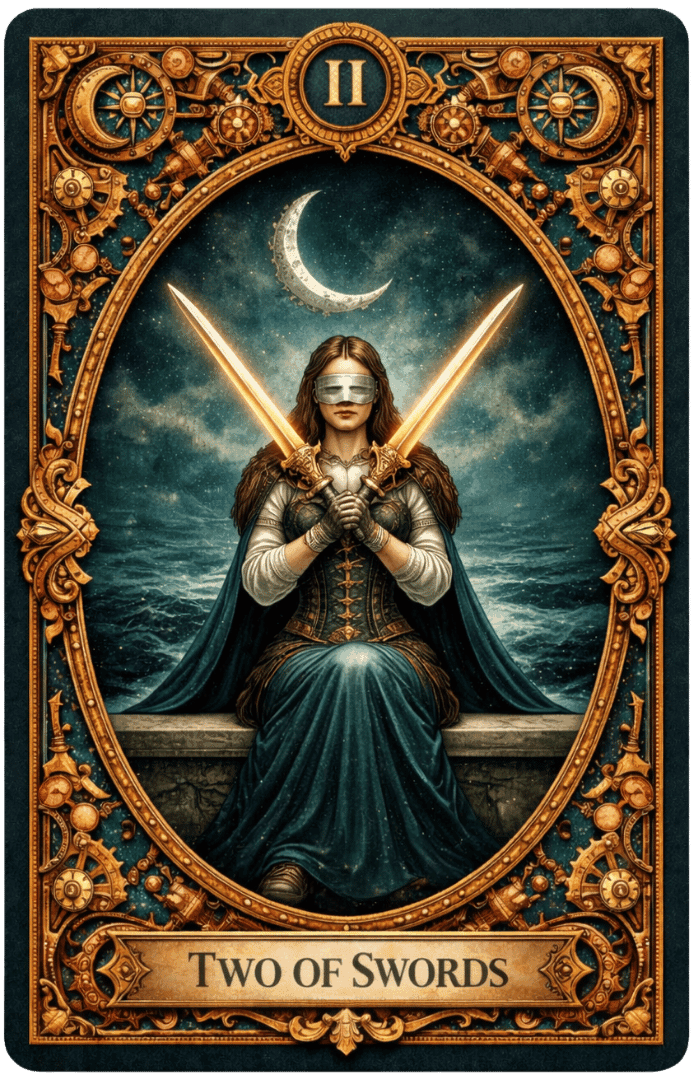
When Two of Swords appears in your reading, it is an invitation to explore indecision and stalemate. A blindfolded figure holds two crossed swords before a still sea under a crescent moon — the posture of deliberate not-knowing, a truce with oneself.
Upright vs Reversed
Upright
You are at an impasse — and you know it. The Two of Swords speaks to wilful blindness or paralysis in the face of a decision. Remove the blindfold, even if what you see is uncomfortable.
Reversed
Confusion beginning to clear, or information emerging that breaks the stalemate. A difficult choice may now be unavoidable.
Two of Swords in Your Reading
Love & Relationships
In matters of love & relationships, Two of Swords brings the energy of indecision and stalemate. Through the lens of love & relationships, you are at an impasse — and you know it.
Mind & Shadow
In matters of mind & shadow, Two of Swords brings the energy of indecision and stalemate. Through the lens of mind & shadow, you are at an impasse — and you know it.
Purpose & Path
In matters of purpose & path, Two of Swords brings the energy of indecision and stalemate. Through the lens of purpose & path, you are at an impasse — and you know it.
Two of Swords — Yes or No?
Yes or No Reading
It Depends
This card is nuanced and context-driven. The answer depends heavily on the surrounding cards and the specifics of your question.
Card Combinations
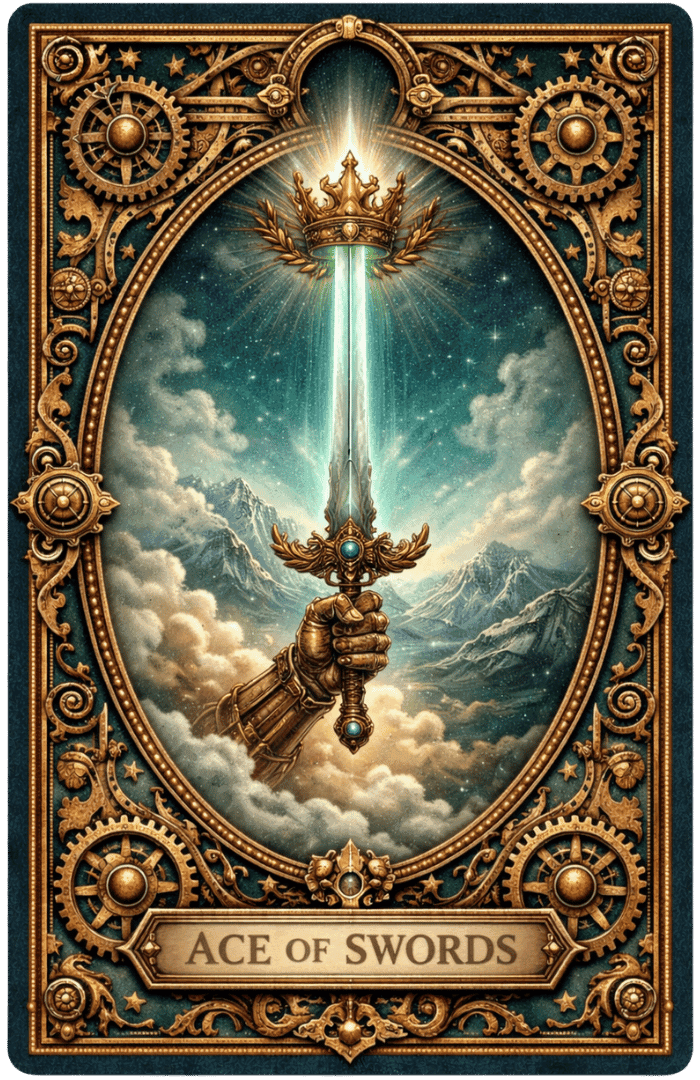
Two of Swords + Ace of Swords
Together, these cards speak to indecision meeting clarity — a powerful combination for mind & shadow.
Read about Ace of Swords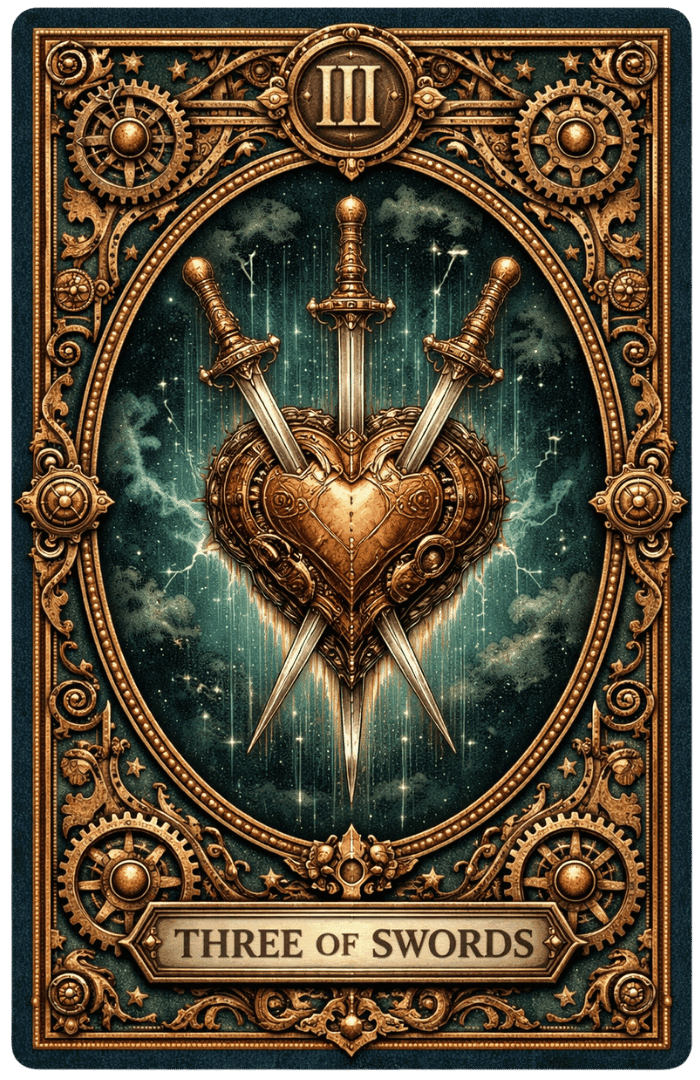
Two of Swords + Three of Swords
Together, these cards speak to indecision meeting heartbreak — a powerful combination for love & relationships.
Read about Three of Swords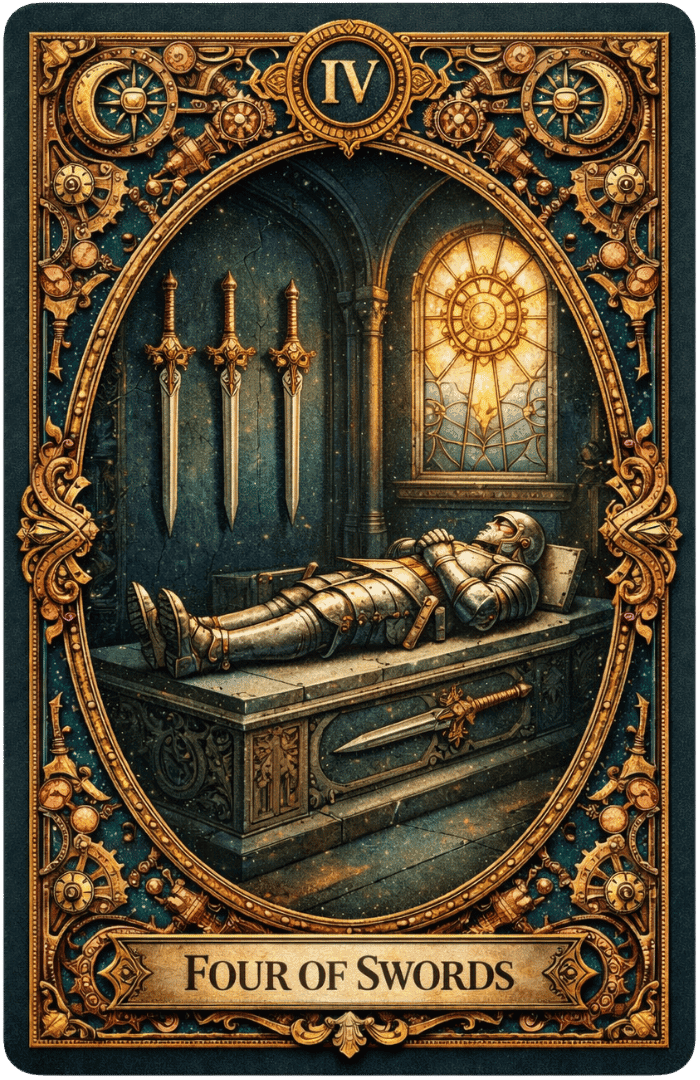
Two of Swords + Four of Swords
Together, these cards speak to indecision meeting rest — a powerful combination for mind & shadow.
Read about Four of SwordsZodiac & Element Connection
Two of Swords resonates with Fire signs — Aries, Leo, Sagittarius. Its themes of indecision and stalemate align with their passionate drive and transformative action.
Journaling Prompt
Reflect on Two of Swords
What role does indecision play in your life right now? How might Two of Swords's message about stalemate guide your next step?
Affirmation
“I remove my blindfold with courage and face my choices with clear, honest eyes.”
See Two of Swords in today's reading
Drawn today? Check the daily card for context.
Related Cards
Two of Swords — FAQ
What does Two of Swords mean in tarot?
You are at an impasse — and you know it. The Two of Swords speaks to wilful blindness or paralysis in the face of a decision. Remove the blindfold, even if what you see is uncomfortable.
What does Two of Swords reversed mean?
Confusion beginning to clear, or information emerging that breaks the stalemate. A difficult choice may now be unavoidable.
What are the keywords for Two of Swords?
The key themes of Two of Swords are: indecision, stalemate, avoidance, truce, blocked emotions.
What does Two of Swords mean for love?
Two of Swords has a strong connection to love and relationships. You are at an impasse — and you know it.
Is Two of Swords a good tarot card?
Two of Swords carries the energy of indecision, stalemate, avoidance. A blindfolded figure holds two crossed swords before a still sea under a crescent moon — the posture of deliberate not-knowing, a truce with oneself. Every tarot card holds both light and shadow — the upright position typically brings its gifts, while reversed reveals the challenge.
Is Two of Swords a yes or no card?
In a yes or no reading, Two of Swords is generally interpreted as "It Depends." This card is nuanced and context-driven. The answer depends heavily on the surrounding cards and the specifics of your question.